…but getting closer to the day my debut novel, Fall Back Down When I Die, lands! It’s now up for pre-order at Amazon!
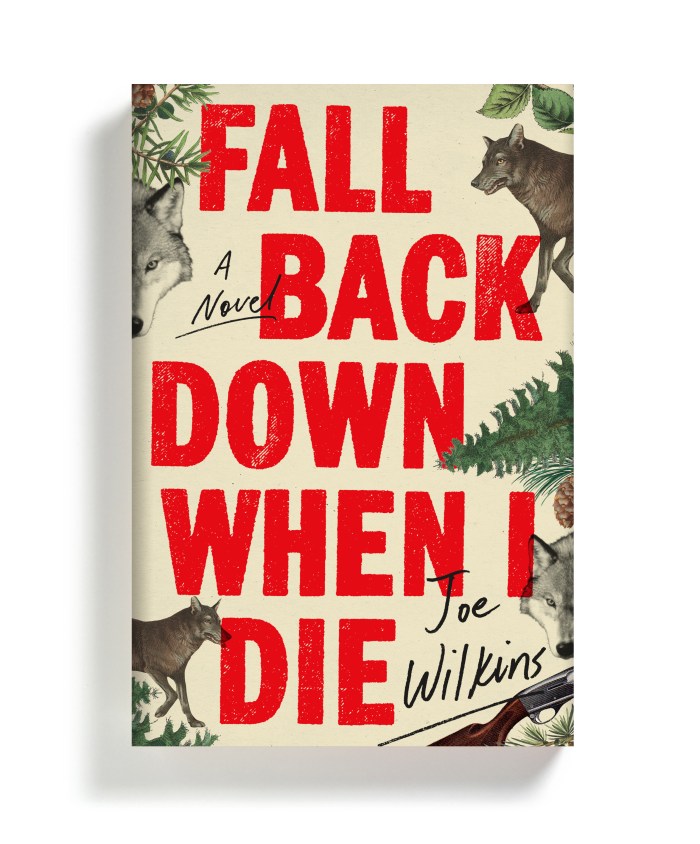
…but getting closer to the day my debut novel, Fall Back Down When I Die, lands! It’s now up for pre-order at Amazon!
 I’m headed to Alaska (for the first time!) this summer to teach at the Kachemak Bay Writers’ Conference, where none other than Pulitzer Prize-winner Anthony Doerr will be the keynote speaker! It sure sounds like an amazing conference in a stunning place–love to see you there!

 I’ll be pointing my nose toward the Wallowas again this summer, where I’ll be joining Laura Pritchett, Nina McConigley, Jennifer Sahn, Kim Stafford, and more for the 31st Annual Fishtrap Summer Gathering. Registration is open. I’d love to see you there!
Ten years ago Stephen Corey, then the new head editor at The Georgia Review, took my essay “Eight Fragments from My Grandfather’s Body.” It was my first real prose publication, and, in many ways, that publication sort of made what I guess I’m calling my career. So I’m pleased as can be to have another piece appearing in the current issue of the always-asontishing The Georgia Review, my second short story, a strange, needy piece I’ve dubbed “Creekboy.” And, of course, it’s in good company, rubbing shoulders with work by Reg Saner, Gary Gildner, Robert Cording, Aimee Nezhukumatathil, Andrea Hollander, and many others.


The link is behind a paywall at Publishers Marketplace, but here are the important details: Little, Brown just bought my novel! And the next one after that!
“National Magazine Award finalist and Pushcart Prize winner Joe Wilkins’s debut AND EVER THESE BULL MOUNTAINS, a story set in the rugged and unforgiving landscape of eastern Montana, about the unbreakable bond between a young ranch hand named Wendell and an abandoned boy named Rowdy who is delivered into his care, a love that is tested when they find themselves on the wrong side of a militant fringe group and Wendell must protect the boy while trying to avoid the violent fate that claimed his father, in addition to a second untitled novel chronicling a murder that tears apart a boom-and-bust town in 1920s Montana, to Ben George at Little, Brown, by Sally Wofford-Girand at Union Literary (World).”
 It’s been a great joy, these past three and a half years, to get to know and, slowly, become part of the Oregon literary community, which is why I’m so pleased about this latest news: my most recent full-length collection of poetry, When We Were Birds, is a finalist for the 2017 Stafford/Hall Award in Poetry from the Oregon Book Awards. (And, as an added bonus, it’s wonderful to know that Major Jackson, a poet I very much admire, judged the award!)
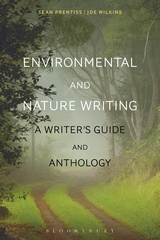 Finally, as I catch up on things that passed me by in the rush of this last fall semester, I’m really excited to see that Environmental and Nature Writing: A Writer’s Guide and Anthology is now available from Bloomsbury Academic. Sean Prentiss and I worked super hard on this one, and we think it’s a great text for classes in environmental studies programs focused on writing, as well as classes in English and creative writing programs focused on nature and the environment. And the anthology is, uh, really damn good. We’ve got essays, stories, and poems from a host of the sharpest, bravest, wisest, and most diverse nature and environmental writers working today, including Camille T. Dungy, David Gessner, Jennifer Lunden, Erik Reece, David Treuer, Bonnie Jo Campbell, Alyson Hagy, Bonnie Nadzam, Lydia Peelle, Benjamin Percy, Gabrielle Calvocoressi, Nikky Finney, Juan Felipe Herrera, Major Jackson, Aimee Nezhukumatathil, Natasha Trethewey, and many more.
So pleased the good folks at the Blood Orange Review took a chance on the this strange, broken story, which features these very cool hover-over footnotes!
 So late with this, but wanted to share a recent poem, “Explain: Extinct,” which was up at The Missouri Review‘s Poem of the Week feature this last fall.
 I’ve got new essays in recent issues of Orion and Riverteeth. Both grow out of our time down on the Rogue, time which seems to matter more and more as the days recede.
 joewilkins.org