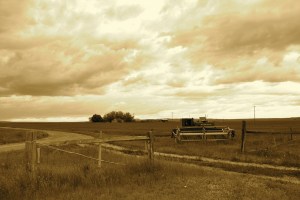
 High Country News has just posted the full text of my essay “Reconciling Family Narrative with Textbook History in Montana’s Big Horn Valley.” Though I really enjoyed researching and writing this one, it means even more to me now, as my grandmother recently passed away. She read an earlier draft, but I would have loved for her to see the piece in print. I miss her.
News
The Far Edges of the Fourth Genre: An Anthology of Explorations in Creative Nonfiction
 A few years ago my friend Sean Prentiss approached me about putting together an anthology focused on craft issues in creative nonfiction. As writers of essays and memoirs ourselves, as professors of creative nonfiction, and as former students of nonfiction greats Mary Clearman Blew and Kim Barnes, we knew all sorts of fascinating conversations were being had about the genre–yet there were very few texts that collected and forwarded these ideas. So, we got to work: we contacted writers we admired, we edited and offered advice, we set the essays next to one another, and now The Far Edges of the Fourth Genre: An Anthology of Explorations in Creative Nonfiction is on its way into the world! Here’s a bit more from the publisher’s website:
Though creative nonfiction has been around since Montaigne, St. Augustine, and Seneca, we’ve only just begun to ask how this genre works, why it functions the way it does, and where its borders reside. But for each question we ask, another five or ten questions roil to the surface. And each of these questions, it seems, requires a more convoluted series of answers. What’s more, the questions students of creative nonfiction are drawn to during class discussions, the ones they argue the longest and loudest, are the same ideas debated by their professors in the hallways and at the corner bar. In this collection, sixteen essential contemporary creative nonfiction writers reflect on whatever far, dark edge of the genre they find themselves most drawn to. The result is this fascinating anthology that wonders at the historical and contemporary borderlands between fiction and nonfiction; the illusion of time on the page; the mythology of memory; poetry, process, and the use of received forms; the impact of technology on our writerly lives; immersive research and the power of witness; achronology and collage; and what we write and why we write. Contributors: Nancer Ballard, H. Lee Barnes, Kim Barnes, Mary Clearman Blew, Joy Castro, Robin Hemley, Judith Kitchen, Brenda Miller, Ander Monson, Dinty W. Moore, Sean Prentiss, Lia Purpura, Erik Reece, Jonathan Rovner, Bob Shacochis, and Joe Wilkins.
Poem at About Place

My poem “The Fragments of the World Seek Each Other” is up at About Place, the literary journal of the Black Earth Institute. This issue, The Future of Water, was guest-edited by the amazing Debra Marquart; I’m excited to dig in and read!
Read This – Alyson Hagy’s Boleto
 On the second page of Alyson Hagy’s quiet yet striking novel Boleto, Will Testerman, a young Wyomingite with a restless sadness in him, considers one of his quarrelsome father’s long-time complaints: “Town is eating its way right past us . . . When I was a kid, you couldn’t pay people to live in this part of the state. Too cold. Too much isolation. Now everybody in America thinks they’re in love with fresh air and loneliness.” Will dismisses his father, a man who has given himself over to a town job he hates to supplement the lean years on the ranch, as a man who has bartered away what he once held dear, as a man unable to dream. Will Testerman, though, now there’s a dreamer. Will has an ache for a kind of wild, elemental excellence. He dreams of working with horses, the best horses—and making them even better.
Will’s journey, of course, is not nearly so simple and clean and honest as he would like it to be. From slopping stalls as a groom for horse people in Texas to training polo ponies in suburban southern California for the mysterious Don Enrique, Will finds that the American West has been and continues to be the play-place of those who’ve extracted or variously used its mythic landscape and its people for all they’re worth. Yet Will’s dream blinds him to this abuse, to the greed all around, and before he knows it he finds he must choose to either follow his vision of horsemanship or save an illegal immigrant he works with from a cruel fate at Don Enrique’s hands.
He does the right thing, of course; he sells his prize filly and turns for home. Though he will come back to his father’s house a well-to-do man, though his father will very likely congratulate him on his success, we understand he has lost nearly everything, and our hearts break for him. “Ah, shit,” Will says to his filly Ticket, trying finally to explain himself and his stinging dreams. “It ought to be simple, right? You do a thing, and you do it right, and it gets done. But this stupid Wyoming person kept reading the situations wrong. He kept getting the people so wrong that it didn’t matter if he got the horses right.”
Like one of those country songs where everything goes wrong, I left Boleto still humming Hagy’s wide-open, wind-and-worry tune. Even a few pages into the book, we’re pretty sure things aren’t going to work out for Will. But that doesn’t matter. The sad, expansive, affecting particulars of Will Testerman’s journey of disillusionment are what make the novel so fine. Hagy’s Boleto offers us the best that tragedy and fiction can: another mind, another heart, another world. We are moved by Will’s brilliance—his devotion to doing things right, his quiet and impressive competence, his love and care for those around him. We are moved as well by his faults—his blind ambition, his fumbling for relationship. Though Will Testerman is brought low by the end of Boleto, I feel myself grow larger, as if I might turn from the pages and move through my world with more care and grief, able to better feel the wind.
Between Texas and California, those two disastrous poles, Will takes summer work as corral boss at a dude ranch in the Absaroka Mountains of northern Wyoming. It is here, in the company of horses, wolves howling in the night and elk wandering the mountain draws, that Will seems most himself, that his honesty and his earnest, hard-working nature are most on display. One day, out on a ride, he and a boy from Georgia get caught in a rain storm. The cinch on the boy’s saddle breaks, and they are forced take shelter in a shallow cave, the roof blackened by ancient fires, while Will fixes the saddle. “Have you always been a cowboy?” the boy asks Will:
Will laughed and put his hat back onto his head. The kid had bought a silver felt hat for himself in Cody before he got to the ranch, and he had never taken it off, not during the entire ordeal. Not like you mean, he said. I was a boy first. I used to play football like you play soccer. I did all those science and history projects in school.
Though Will’s answer is gentle and knowing, it might be the very key to his tragedy. Even in this good place, a place he can almost be what he is, Will Testerman can’t quite say it. Or maybe it is that he doesn’t know. No matter, if he can’t claim it here, where there is still some room for a cowboy in the world, Lord knows there won’t be anyplace else for him.
Winner of the High Plains Book Award in Poetry
 Super pleased to hear that Notes from the Journey Westward has won the 2013 High Plains Book Award in Poetry! Lots of great finalists and winners this year, including Louise Erdrich, Emily Danforth, and David Abrams, among others!
The Magic Barrel
 This weekend, at the Whiteside Theatre in Corvallis, I’ll be reading with a whole host of amazing Oregon writers as part of The Magic Barrel, an annual fundraiser for the Linn Benton Food Share. There’ll be music, wine, poetry–it ought to be fun!
Tupelo Quarterly
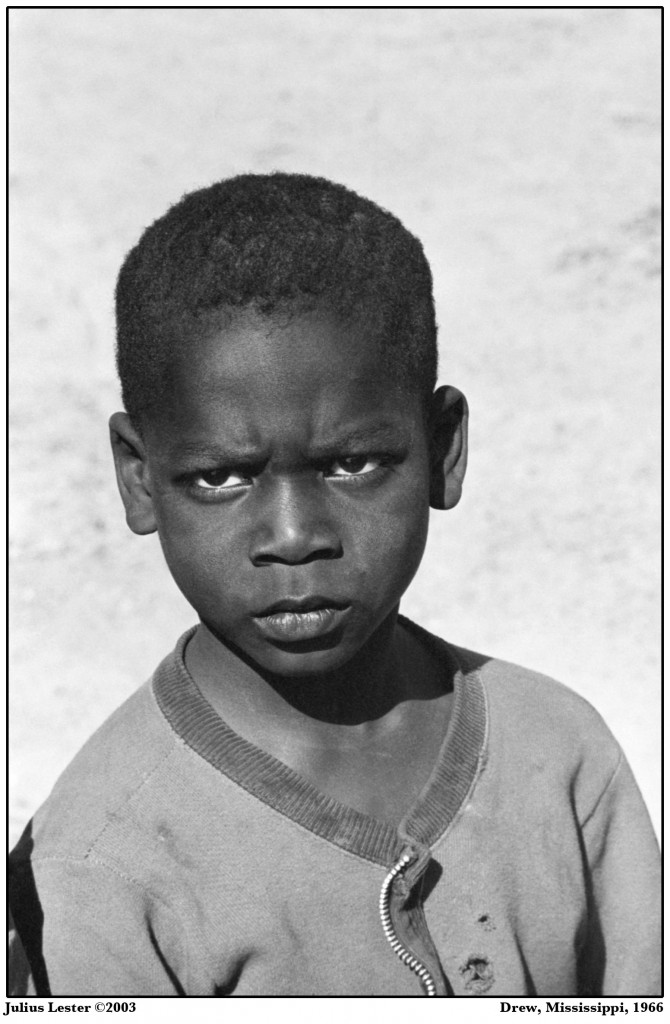 The inaugural issue of Tupelo Quarterly is live, and, wow, it’s a stunner, beginning with editor Jessamyn Smyth’s foreword. I couldn’t be more please to have two poems, “Trotline” and “Eat Stone and Go On,” included, as well as a very generous editor’s feature, Spikes & Rivers: The Work of Joe Wilkins.
Top Ten Nod at Contrary Magazine
 They’re celebrating their tenth birthday over at Contrary Magazine, and the editors are picking their favorite selections from the archives. Jazzed to see that poetry editor Shaindel Beers chose my poem “The Garage Sale Daze Meditations,” which is part of my manuscript-in-progress, for her best of list!
Review of Notes from the Journey Westward
Big thanks to Montana Poet Laureate Tami Haaland for this careful, perceptive review of Notes from the Journey Westward. You couldn’t ask for a better review than this:
This book is visionary. It is admirably consistent and meditative, relentlessly honest in its rejection of any romantic version of the West, and reverent before stars and morning, before the earth and the people who have survived on it. Joe Wilkins honors them by telling their stories.
Notable Nod in Best American Essays 2013
Pleased to see that my essay “Eleven Kinds of Sky,” which was originally published in Orion Magazine and built of snippets from my memoir, The Mountain and the Fathers, earned a notable nod in Best American Essays 2013, edited by Robert Atwan and Cheryl Strayed.
 joewilkins.org