News

Reading in Portland

I’ll be reading with a whole host of great writers this Saturday in Portland as part of the Oregon Writer’s Collective (info through the link and below). Love to see you there!


On August 2nd the Oregon Writer’s Collective arrives in the NE Portland backyard of poet Elyse Fenton for our second annual Portland reading of poetry, fiction, memoir, and musical genre-bending.

Drinks and mingling begin at 7:30 pm. We’ll have Laurelwood beer available for a suggested $3 donation (to offset costs). Please bring snacks if you’d like as well!

Leo London—the best singer and songwriter you’ve never heard of, whose current project is with the Portland rock and roll band The Domestics—will play a few songs to get our night started. We’ll follow with this star-studded cast, broken by an intermission:

Carl Adamshick’s first book, Curses and Wishes, won the Walt Whitman Award from the Academy of American Poets and an Oregon Book Award. His second collection, Saint Friend, is published with McSweeney’s. He lives here in Portland and is a co-founder of Tavern Books, a non-profit publisher of poetry.

Elyse Fenton is the author of Clamor (Cleveland State University Poetry Center, 2010), winner of a number of prizes. Her poetry and nonfiction have appeared in American Poetry Review, Pleiades, Best New Poets, Prairie Schooner and The New York Times. In 2013, her manuscript-in-progress for a second book received the Poetry Society of America’s Alice Fay Di Castagnola Award. She teaches at Portland Community College and has an Icarus complex regarding her tomato plants.

Samiya Bashir’s books—Gospel, Where the Apple Falls, Role Call: A Generational Anthology of Social & Political Black Literature & Art, and Best Black Women’s Erotica 2—have brought some people joy, according to them. Her poetry has recently appeared in Poetry Magazine, World Literature Today, Poet Lore, Michigan Quarterly Review, Crab Orchard Review, The Rumpus, and more. Samiya teaches creative writing at Reed College, where she sometimes takes her magic cat, who shares her obsession with trees, blackbirds, and hobo signs, to class. Find out more @ samiya bashir dot com.

Joe Wilkins is the author of a memoir, The Mountain and the Fathers, winner of the 2014 GLCA New Writers Award and a finalist for the 2013 Orion Book Award, and two collections of poems, Notes from the Journey Westward and Killing the Murnion Dogs. He lives with his family in McMinnville, Oregon, where he teaches writing at Linfield College.

John Brehm is the author of Sea of Faith, winner of the Brittingham Prize, and Help Is on the Way, winner of the Four Lakes Prize, both from the University of Wisconsin Press. His poems have appeared in Poetry, Poetry Northwest, The Sun, New Ohio Review, The Gettysburg Review, and many other journals and anthologies. He teaches at Mountain Writers Workshop in Portland and The Lighthouse Writers Workshop in Denver.

Colie Hoffman is a poet, essayist, and recent transplant to Portland, OR from New York. She spends many days of the week working at a travel research firm, where she translates English into different English. Colie has been a writer in residence at Writers Omi in upstate New York and at Sangam House in South India, for which she won the M Literary Residency. Her poems have appeared in Sixth Finch, TYPO, Blood Orange Review, and elsewhere.

Molly Reid’s stories have appeared on NPR and in the journals Triquarterly, Redivider, Indiana Review, Pear Noir, The Literary Review, and others. She has received fellowship support from the Breadloaf Writer’s Conference, the Millay Colony for the Arts, the Ucross Foundation, and the Virginia Center for the Creative Arts. She currently lives in Portland, Oregon, where she is at work on a novel.

Michael Copperman’s prose has appeared in The Oxford-American, The Sun, Creative Nonfiction, Gulf Coast, Guernica, Triquarterly Online, The Rumpus, UNSAID and Copper Nickel, among others, and has won awards and fellowships from the Munster Literature Center, Breadloaf Writer’s Conference, Oregon Literary Arts, and the Oregon Arts Commission. He currently is waiting on word from New York about a memoir he fears will never find a home, and finishing a novel-in-stories even less commercially viable than the memoir in question.

James Yu is from Beaverton, where last year he finally saw a beaver.

Thomas Dietzel is the creator of the musical art project, EURHAPSODOI, which performs short excerpts of Homer’s Iliad and Odyssey – in the original Greek and with musical accompaniment – to allow audiences to make the connection between ancient oral formulaic methods of composition and the use of the freestyle technique in hip hop. It is not hyperbolic to suggest that ten minutes of listening to EURHAPSODOI perform will communicate more about the shared aspects of these two cultures than twenty written volumes ever could. EURHAPSODOI has performed at the Portland Art Museum as part of The Body Beautiful Exhibit as well as part of Leo Daedalus’ Portland avant-garde variety show, The Late Now.

A Pushcart Prize for “Say”

Pushcart Prize Anthology 2015Couldn’t be happier to report that my story “Say,” originally published in The Sun (and nominated as well by former Pushcart Prize-winner and at-large editor Jennifer Lunden–thank you!), won a 2015 Pushcart Prize and will appear in The Pushcart Prize Anthology XXXIX alongside the likes of Karen Russell, Ellen Bryant Voigt, D. A. Powell, Louise Glück, Philip Levine, Russell Banks, Edward Hoagland, Rick Bass, Mary Szybist, and many other amazing writers.

Nye Beach Writer’s Series

Joe WilkinsReally looking forward to reading at the Newport Visual Arts Center as part of the Nye Beach Writer’s Series sponsored by Writers on the Edge on Saturday, June 21st at 7 pm. I’ll be conducting a craft class the next day as well; get a hold of the folks at Writers on the Edge to register. Should be a lovely couple of days on the Oregon Coast!


High Desert Journal #19

IMG_2072 Issue 19 of High Desert Journal, my first as nonfiction editor, is out! And the essays you’ll find inside–wow: Annie Lampman navigates the wild worlds of birds and teenage boys ; Kate Lebo picks huckleberries and recites love poems; Jonathan Rovner almost dies, again; and Sean Prentiss takes issue with Frederick Jackson Turner, offering his own “Frontier Thesis.” Check ’em out!


My Writing Process

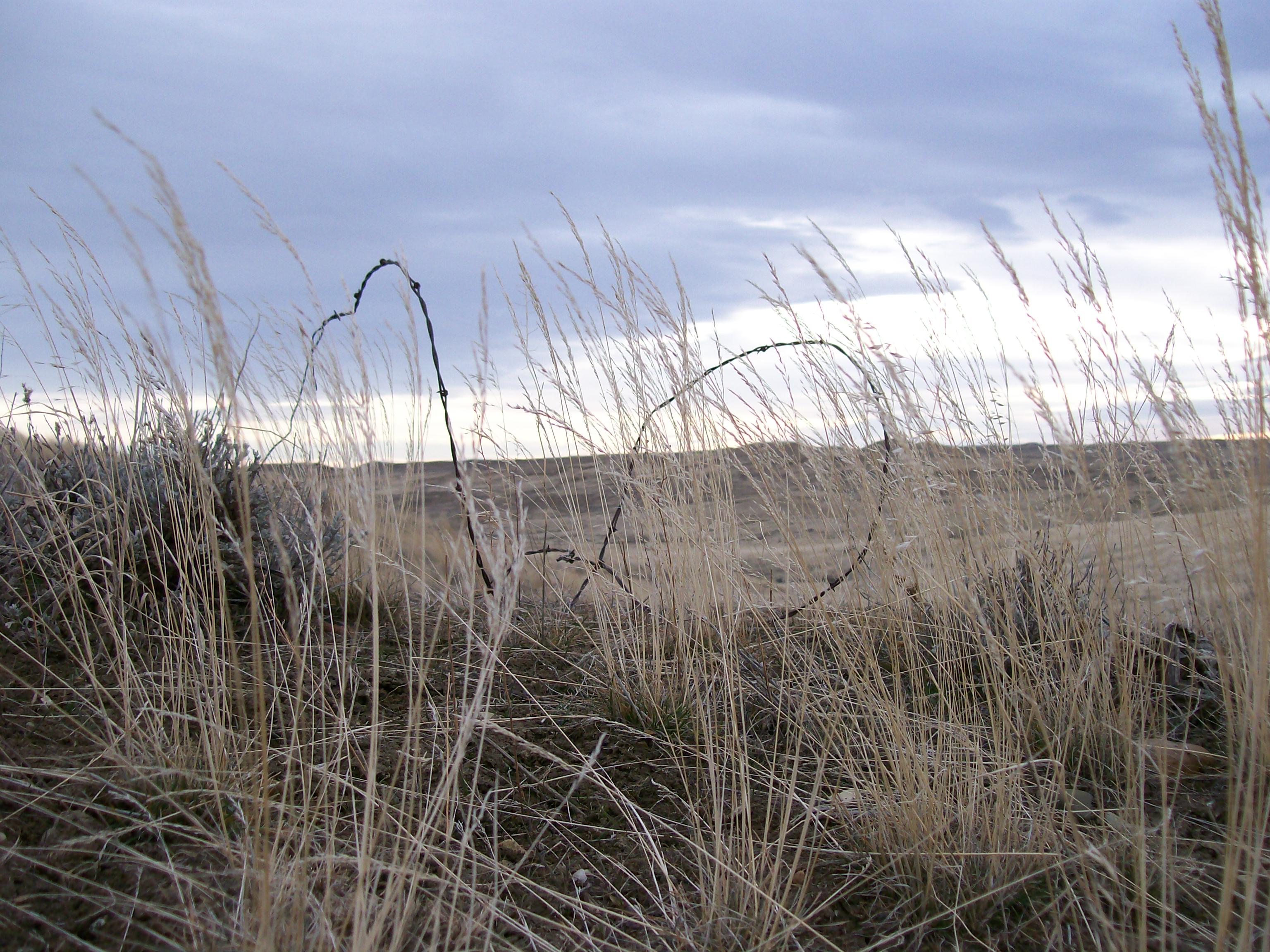
barb-wire.jpgA couple weeks ago I was invited to participate in a writerly game of tag, a writing process blog tour in which writers speak about their work and then tag a friend to do the same the week after. Well, I got tagged and then missed my date to post and messed the whole thing up. But—sweet redemption!—I got tagged again. So here’s my attempt to get back in the game:


First up, Jeff Darren Muse, who originally tagged me: Jeff Muse writes and teaches along the Mississippi River in southwestern Wisconsin. Trained in science and environmental education, he recently received an MFA from Ashland University, focusing on creative nonfiction. His writing has appeared in The Common, Flycatcher, High Country News, and Poecology, among other publications, and he’s a staff writer for Hothouse Magazine, published by Newfound Journal. Jeff is working on a collection of personal essays exploring manhood, wild places, and his own inner landscape—the high points and the low. Learn more at www.jeffdarrenmuse.com.


Years ago, Jeff sent me a kind note about an essay of mine he’d read in Orion. That note meant a lot to me, as I was new to publishing and couldn’t quite believe people were out there reading. And it’s been a distinct pleasure, and lesson, to subsequently be reading Jeff’s work over the years. Though Jeff and I have never met in person, I feel like I know him through his essays: someone careful, attentive, and honest; a thinker, a wanderer; a soul celebrating and questioning the ways we live upon the earth. For instance: check out his heartbreaker of an essay “Pitman Creek,” which was originally published in Ascent—such wisdom, such kindness.


And now, Anna Vodicka, who retagged me: Anna Vodicka grew up in Sugar Camp, Wisconsin, an unincorporated town in the Great Lakes region. She earned her BA from Tufts University and an MFA in Creative Writing from the University of Idaho, where she taught undergraduate writing for three years. Her essays have appeared in Brevity, Guernica.com, The Iowa Review, Michigan Quarterly Review, Ninth Letter, Shenandoah, and other national literary magazines. She is a grant recipient of the Charles Redd Center for Western Studies and Washington State’s Artist Trust. In 2013, she won The Missouri Review audio competition for prose and was shortlisted for Best American Essays and a Pushcart Prize. She has lived in South America and Spain, and she has sung for diplomats and Disney World and in the streets of Paris. She has been waterskiing as long as she can remember. And while she once had ambitions to be a game show host and President of the United States, she gave up those dreams to be a writer. She currently lives in the island nation of Palau, in western Micronesia, where she is at work on her first book. You can find her webpage at: http://www.annavodicka.com. She blogs at: http://annavodicka.wordpress.com.


I first met Anna Vodicka in the spring of 2013, at the annual Get Lit Festival in Spokane, Washington. We were scheduled to be on a panel together—“My Truth, Your Truth, Their Truth: Writing Memoir”—and it turned out to be hands down the most fun I’ve ever had on conference panel. One of the other slated panelists didn’t show up, so Anna and I just talked—about memoir, about truth, about writing. We read from our work, we laughed, we told stories and bullshitted with the audience. I so enjoyed and learned from our conversation that day, and I continue to delight in and learn from Anna’s writing. I was going to try to pick one essay to link to, but I love too many of them. All so sharp, so perceptive and well made, so necessary—here are a trio of favorites: “On Modesty,” “Girl/Thing,” and “There’s a Train a’Comin’.”


And, now, on to the writing process questions I was tagged to answer!


  1. What am I working on?

    I just finished a draft of a novel—a postmodern, historical whodunit that partially takes the form of a community history and centers on a murder that was never solved, titled Others Who Were Here—and am waiting to hear what my agent has to say about it. I’m hoping to be headed back to that manuscript soon, but in the meantime I’m working on a few short stories—I think I might have a manuscript building there, too, tentatively titled The Kickers and the Cowboy Angels—and I’m tinkering with poems. Always poems.


  2. How does my work differ from others of its genre?

    This is a tough one to answer. When I first started writing, I was only hoping to pen a poem that mattered as much to me as one of Richard Hugo’s, or an essay that leveled me like any of James Baldwin’s. And I still feel like I’m writing in shadows, following the writers I admire. Yet we can’t help but be ourselves, our own particular wonders and questions and obsessions seeping in. So, though I’m not sure it makes me all that different, I guess I’d say my prose tends be attuned to sound, to lyrical sensibilities and qualities. And my poems, though making space for the imaginative and the intellectual, are always tied to the real, to the world of rocks and rivers and boys getting muddy on the river bank.


  3. Why do I write what I do?

    Though I think you could take this one a couple of ways, I’m going to steer it toward subject matter, toward the reasons I write about fathers and sons, loss and landscape, poverty, violence, family, memory, myth, and story. And, well, I think the answer to that is that those narratives, those ideas, those bits of the world have imprinted themselves upon me, have shaped my life and the lives of those I love—and I want to understand how and why and what for. So I write toward those things. I write to understand and to know and feel and live more fully.


  4. How does your writing process work?

    Though I very often have a number of projects going at once, I’m a slow writer. Though I sit down to work every morning (and usually get in at least an hour or two), a poem takes me months. A story or essay, about a year. A book project, many years. As I work, I move back and forth between pieces and projects, giving myself time to think and reflect and come back to the page with clearer, sharper vision. And, eventually, a few things get done. Or close to done. And then I send them out to friends. And they send me some ideas. And I get back to it.


And here’s who I tagged: Russell Rowland. Russell Rowland has published three novels, In Open Spaces (Harpercollins 2002), The Watershed Years (Riverbend 2007), and High and Inside (Bangtail Press, 2013). His first novel received a starred review from Publishers Weekly and made the San Francisco Chronicle’s bestseller list. His second was a finalist for the High Plains Book Award. He has an MA in Creative Writing from Boston University and has taught in several institutions. He currently lives in Billings, Montana, where he teaches workshops and does private consultation. You can find him online at: http://russellrowland.com.


I remember a lonely evening driving east across Montana on Highway 12. I was headed home to interview my grandmother and to take her over to her parents’ old home-place on the Crow Reservation. I was in my first semester of graduate school and was trying to write an essay, trying to write about growing up in Montana, about being the son and grandson of Montanans, but I didn’t know how. Just out of Helena, I caught a public radio station; they were interviewing two western authors, Russell Rowland and Lynn Stegner, about a new anthology they’d edited, West of 98: Living and Writing the New American West. The editors read from their work, and I was so struck by Rowland’s essay, “Chasing the Lamb,” a careful, wise meditation on ranchwork; the histories, myths and realities of the west; and Rowland’s choice to live in the West and be a writer. It was exactly what I needed to hear. Even after the station faded to whirrups and static out of White Sulphur Springs, I carried his voice and his story with me. That trip eventually resulted in this essay; I have Russell Rowland to thank for it.

Sustainable Arts Foundation Promise Grant

Some lovely news this week: my work has been awarded a Promise Award (which comes with a welcome bit of cash for the summer) from the Sustainable Arts Foundation, “a non-profit foundation supporting artists and writers with families.” Here’s the write-up from the awardees page:

Joe Wilkins is working on a collection of short stories, The Kickers and the Cowboy Angels. The pieces we read from the collection impressed us with their muscular but poetic prose — a rare and compelling combination. The author of a memoir and two collections of poetry, Wilkins lives with his wife and two children in Oregon, where he’s also a professor of English at Linfield College.
joewilkins.org