Killing the Murnion Dogs

Killing the Murnion Dogs, my first full-length book of poems, will be published by Black Lawrence Press in August of this year. We’ve been working on the cover, and I’ve pasted the final below, along with some advanced reviews:

“Joe Wilkins has a big, true, highway-running American voice. He remains one of my favorite young poets working today. When you see a new book of his, you should celebrate. Like this one.  Just buy it, put down the window, and let the music blow back your hair. It’s nothing but alive.”

–Luis Alberto Urrea, author of The Devil’s Highway and The Fever of Being


“In Killing the Murnion Dogs, the old lonelinesses, bodied forth by whisky in jam jars and rotting porches, highways, wolves, the dream of escape, are reinhabited and updated by Joe Wilkins’ own urgent interrogations – most notably: where is home, and why is memory so heartbreakingly incomplete? Tending the spirits of Richard Hugo and James Wright, master chroniclers of sad towns and desperate cities, these patient, vulnerable, angry and unapologetically Romantic poems are helplessly tender toward ruin, and full of stubborn belief in the beauty that can be coaxed from desolation. ”

–Lia Purpura, author of On Looking and King Baby


Not many poets address the American “interior” with the skill and insight Joe Wilkins displays in Killing the Murnion Dogs. I mean interior in both senses: Wilkins does a wonderful job evoking hardscrabble landscapes of Montana buttes and Mississippi cotton fields, sunflowers and coyotes, okra casseroles and rust-gutted Chevies. But his deeper subject is the lives of the farmers and ranchers who inhabit that land, lives he illuminates with gritty authority and boundless compassion. This is a first book wise beyond its years.

–Campbell McGrath, author of Spring Comes to Chicago and The Florida Poems


“These poems examine what and how we perceive and remember, the source, substance, and journey of our time on this earth. My favorite poem in the collection may be “Outside a Liquor Store in South Memphis” which is lush, vivid, itchy and full of white space. I’m grateful for the pulse and heat of all of these poems, and to Joe Wilkins for providing the language, nerve, heart and invitation to go with him, from the opening rain spell to the last lines of the final poem, “Prayer”: ‘Oh   this dust/ here is the good north pasture   and this dust here is home.'”

–Rebecca Wee, author of Uncertain Grace

Two Poems in Poetry Northwest

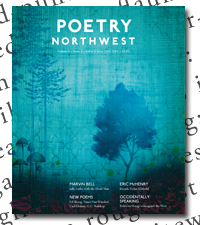
I’m delighted to have two poems, “On the Beginning of Winter in Some Lost Industrial City of the North River Country” and “Poem Thinning Out into Prayer,”  in the latest issue of Poetry Northwest, the storied quarterly founded by, among others, Richard Hugo.


Poetry Northwest was founded as a quarterly, poetry-only journal in 1959 by Errol Pritchard, with Carolyn Kizer, Richard Hugo, and Nelson Bentley as co-editors. The first issue was 28 pages and included the work of Philip Larkin, James Wright, and William Stafford.

Poetry Northwest soon gained an international reputation for publishing some of the best poetry by established and up-and-coming poets in the U.S, Canada, Britain, and beyond, including such notables and award winners as Stanley Kunitz, Thom Gunn, Phillip Larkin, May Swenson, Theodore Roethke, Hayden Carruth, W.S. Merwin, John Berryman, Czeslaw Milosz, Philip Levine, and Anne Sexton.

In 1963, Poetry Northwest became a publication of the University of Washington. In 1964, Carolyn Kizer became the sole editor of the magazine, and held that post until 1966, when she resigned to become the Literature Director at the National Endowment for the Arts. David Wagoner then assumed the role of editor, a position he held for 36 years.

During Wagoner’s tenure, the magazine continued to publish established poets alongside new and emerging writers.  Writers such as Harold Pinter, Joyce Carol Oates, Annie Dillard, Raymond Carver, James Welch, Ted Kooser, James Dickey, Robert Pinsky, Richard Wilbur, Wendell Berry, Charles Baxter, Mary Oliver, Edward Hirsch, Stanley Plumly, Linda Pastan, Stephen Dobyns, Stephen Dunn, Jorie Graham, Michael Harper, and Mark Strand were among the major contributors to its poetry-only pages.

In 2002, after several years of dire financial circumstances, Poetry Northwest — at the time one of the longest-running poetry-only publications in the country — temporarily ceased publication.

since 2005

In August 2005, the University of Washington appointed David Biespiel the new editor of Poetry Northwest, with an agreement that the editorial offices of the magazine would relocate to the Attic Writers’ Workshop in Portland, Oregon. The new series resumed publication in March 2006, in a larger, trade magazine format, appearing biannully as a print edition, with new monthly features published online. The magazine was incorporated as a 501(c)3 nonprofit in March 2007. Circulation quickly rebounded, surpassing pre-2000 levels as dedicated readers rediscovered an old favorite, and new readers enbraced the innovative new format.

In January 2010, the  Board of Directors appointed Kevin Craft the fifth editor of Poetry Northwest. Craft returned the editorial offices to the greater Seattle area, reaching an agreement with Everett Community College to house and publish to magazine at Everett, where it will play in integral role in EvCC’s Written Arts AFA Program. Even so, Poetry Northwest remains an independent, autonomous nonprofit organization dependent on subscriber and community support.

According to Craft, “Our mission remains what it has been for more than five decades. In the words of founding editor Carolyn Kizer, ‘We shall continue to encourage the young and the inexperienced, the neglected mature, and the rough major talents and the fragile minor ones.’ We remain as committed as we were in 1959 to publishing the best poetry we can find, and to expanding the role and scope of poetry in ways both public and private, innovative and traditional, as an art and as a clear and necessary dialogue in a world overrun with noise.”

Two Poems in Cave Wall #8

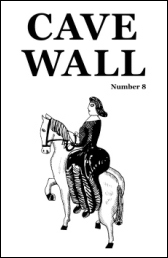
I have two poems in the most recent issue of Cave Wall, which also features wonderful new work by Robert Bly, Jillian Weise, and many others. Though Cave Wall is relatively new to the scene, editor Rhett Iseman Trull has really put together a wonderful magazine of verse.

Here’s a bit more from their website:

Cave Wall, published twice a year, is a national literary magazine dedicated to publishing the best in contemporary poetry. We are interested in poems of any length and style from both established
and emerging poets. Each issue includes black & white art, as well.
Poems first published in Cave Wall have been featured on Poetry Daily, Verse Daily, The Writer’s Almanac, and in the Best New Poets awards anthology.

 
 What folks are saying about Cave Wall:
 
“In a community that is thriving with literary productivity, a fresh poetry journal has made its debut. Cave Wall…released its premier issue this winter to a flood of positive reaction and readership.”
                                                                    –Jennie Thompson,
Go Triad

“[Cave Wall‘s] goal is to offer poetic wonders. This first issue succeeds wildly.”
                                   –Charles Wheeler, Greensboro’s
News & Record

Cave Wall is a primal urge you must satisfy.”
                                    –Anne Wolfe,
NewPages.com


“Northern Pike” in the Harvard Review

I’m delighted to see my essay “Northern Pike” in the most recent issue of Harvard Review. Here’s a bit about the review from their website:

In 1986 Stratis Haviaras, then Curator of the Woodberry Poetry Room of the Harvard College Library, founded a quarterly periodical called Erato. The purpose of this publication was to publicize the activities of the Poetry Room and create a new forum for discussion of current literary matters and events. The first issue of Erato, which was four pages long, featured a poem by Seamus Heaney, a short piece on Louis Simpson, and a news item from Harvard University Press. Tipped into the issue were three loose-leaf pages of book reviews, including reviews of works by Joseph Brodsky, Marguerite Duras, and Richard Ford.

Within three years the book review section had grown to over thirty pages and the publication was renamed Harvard Book Review. In 1992 Haviaras launched Harvard Review, a perfect-bound journal of over 200 pages, published semi-annually and incorporating the old Harvard Book Review. The purpose of the new journal was to foster the work of new writers, provide a forum for criticism of new literary works, and present the finest poetry and short fiction being written. In 2000 Haviaras retired from Harvard and Christina Thompson was appointed editor. At the same time, Houghton Library assumed administrative responsibility for the review.

In the nearly two decades since it was launched, Harvard Review has emerged as a major American literary journal with an eclectic mix of contributors in a wide variety of genres and styles. Contributors to the journal include: Arthur Miller, Joyce Carol Oates, Seamus Heaney, Jorie Graham, John Updike, John Ashbery, Alice Hoffman, and Gore Vidal, as well as those who are making their literary debut. Recent selections have been anthologized in: Best American Essays 2010, 2009, 2004, and 2003, Best American Poetry 2008, 2006, and 2002, Best American Short Stories 2005 and 2003, Best American Mystery Stories 2006, Best New Poets 2008, Pushcart Prize Anthology 2004 and 2001.