My tenth birthday was the first I celebrated after my father died.
I’ve been shuffling through old pictures and think I’ve found one from that day. My grandfather sits beside me at the formica kitchen table, his big, working-man’s hands folded in front of him. Behind his glasses, his eyes are kind; his bald head shines. He’s trying to look happy, though he was never one for ceremony, never one for gatherings. He liked the plain facts of the prairie better. And, too, he was heartbroken. His beloved son-in-law, goddamnit, had gone and died.
I’m wearing a t-shirt with the sleeves cut off, my dishwater hair a mess. I’m not there yet but getting close to as big as my grandfather (in just a few years I’ll be taller, wider in the shoulders—my grandfather, the one father I had left, beginning to shuffle and stoop.) I’m smiling big, I’m just starting to unwrap a present. I was finishing, that spring, the fourth grade.
My mother isn’t in the picture because she was, I’m sure, taking the picture. Because she was doing what she had to do. Because she was making, despite loss and poverty and drought, a way out of no way. Because she was, even then, building the foundation that would allow her oldest son—at twenty-three, five years of university education in his rearview, an engineering degree in hand, all kinds of economically lucrative possibilities in his front pocket—to claim he wanted to be a poet.
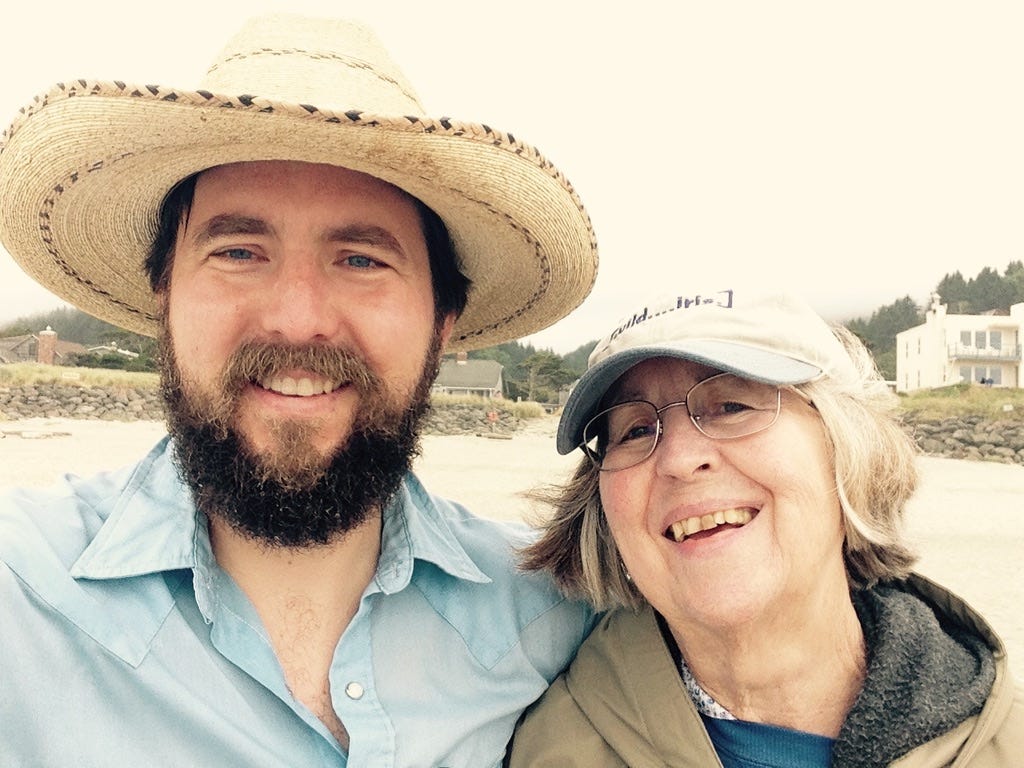
And you know what she told me? God I wish I was half as kind and wise and strong.
“A poet,” she said, “how wonderful!”
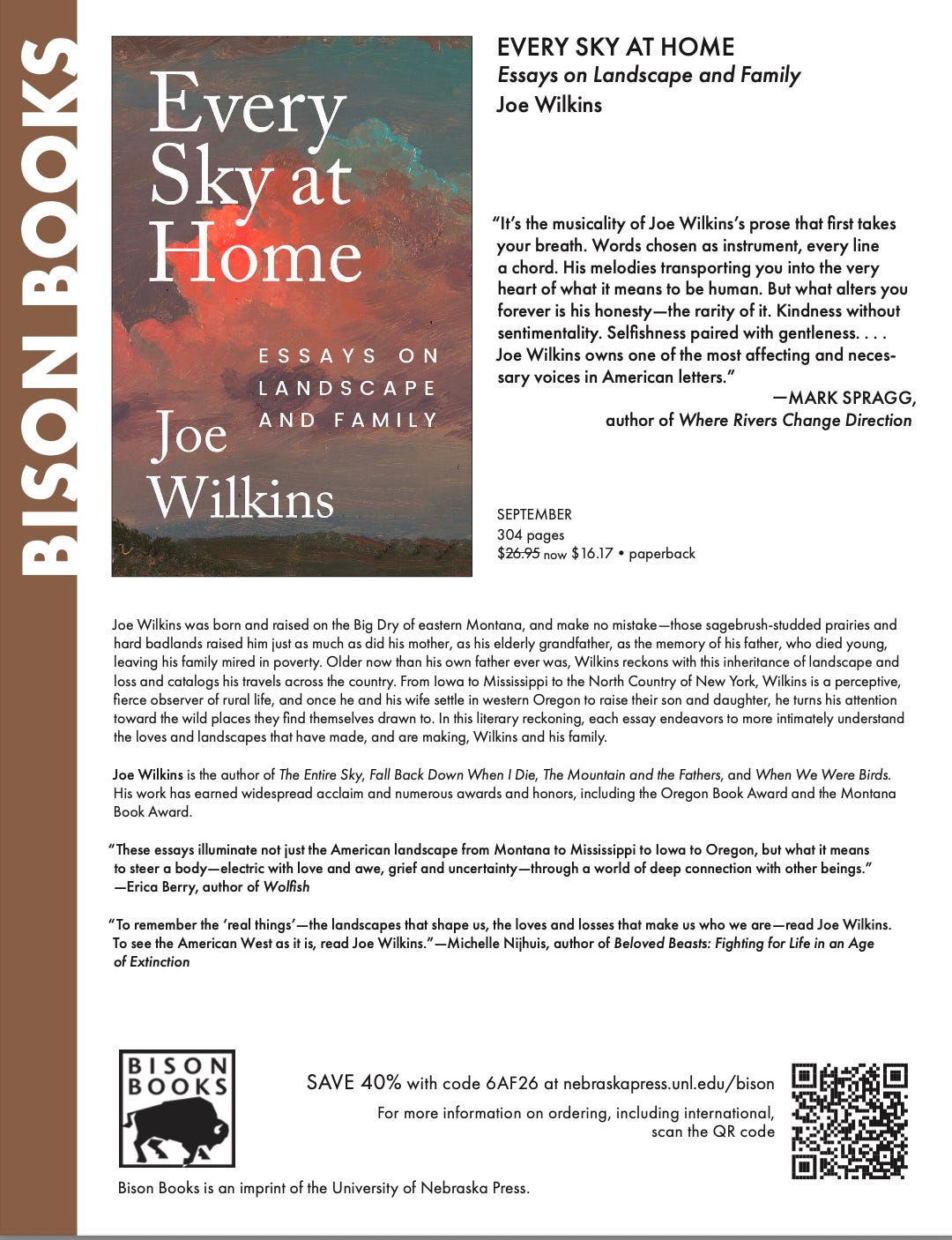
Every Sky at Home will be the first book I’ve published since my mother died. It is, I’m realizing, my tenth: two novels, a memoir, five books of poetry, a textbook, and, now, a book of essays. She liked them all—she was always my mom—but she would have loved this one.
I hope you like it too.